

Bright Red Watermelons
What I learned about how trust operates in consumer behavior through watermelons

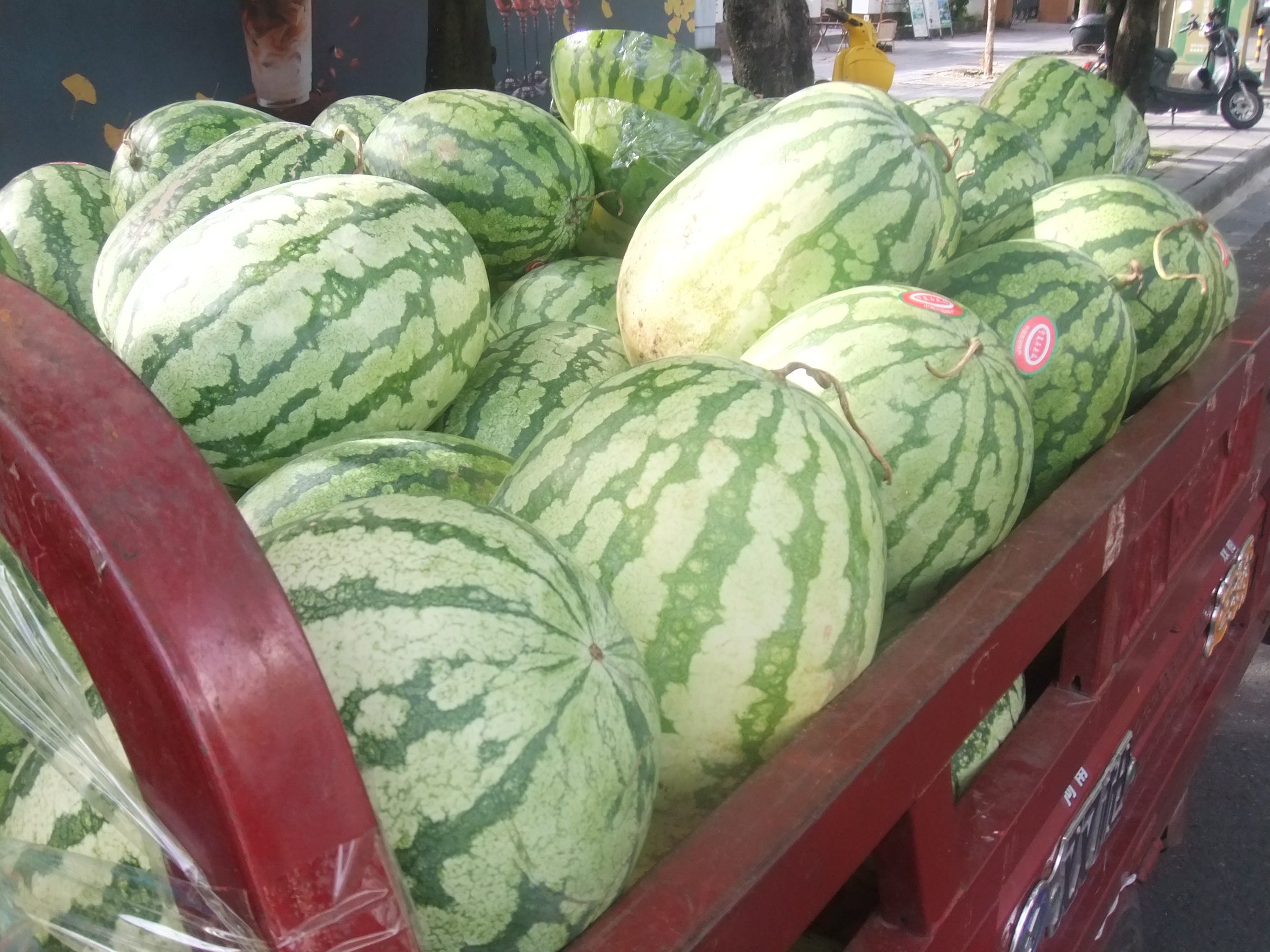
I had just got done seeing the fortune teller in a far away village located outside of the city center. My teacher was driving her moped, with me sitting calmly behind her. We had passed by many street vendors selling all different types of fruits, from longan to peaches. Many of these street vendors come from nearby villages, where they grow their own fruits and then come to populated center centers to sell these products. We had planned to stop at these tiny fruit shops along the side of the street but ran out of time because we both had errands to run. We were just about five minutes from our school when her moped suddenly ran out of energy. My teacher gripped her right hand on the throttle, trying to get her moped to move faster. However, no matter how hard she pushed the throttle, we were not moving anywhere.
The smell of watermelon and the vendors loud announcement using his microphone reached our ears. I pass by this vendor’s watermelon stand pretty often. I especially on super hot days I get very tempted to buy some.
Accepting our fate of the dead moped, we decided to stop to buy half of a watermelon and split it in half for us to share.
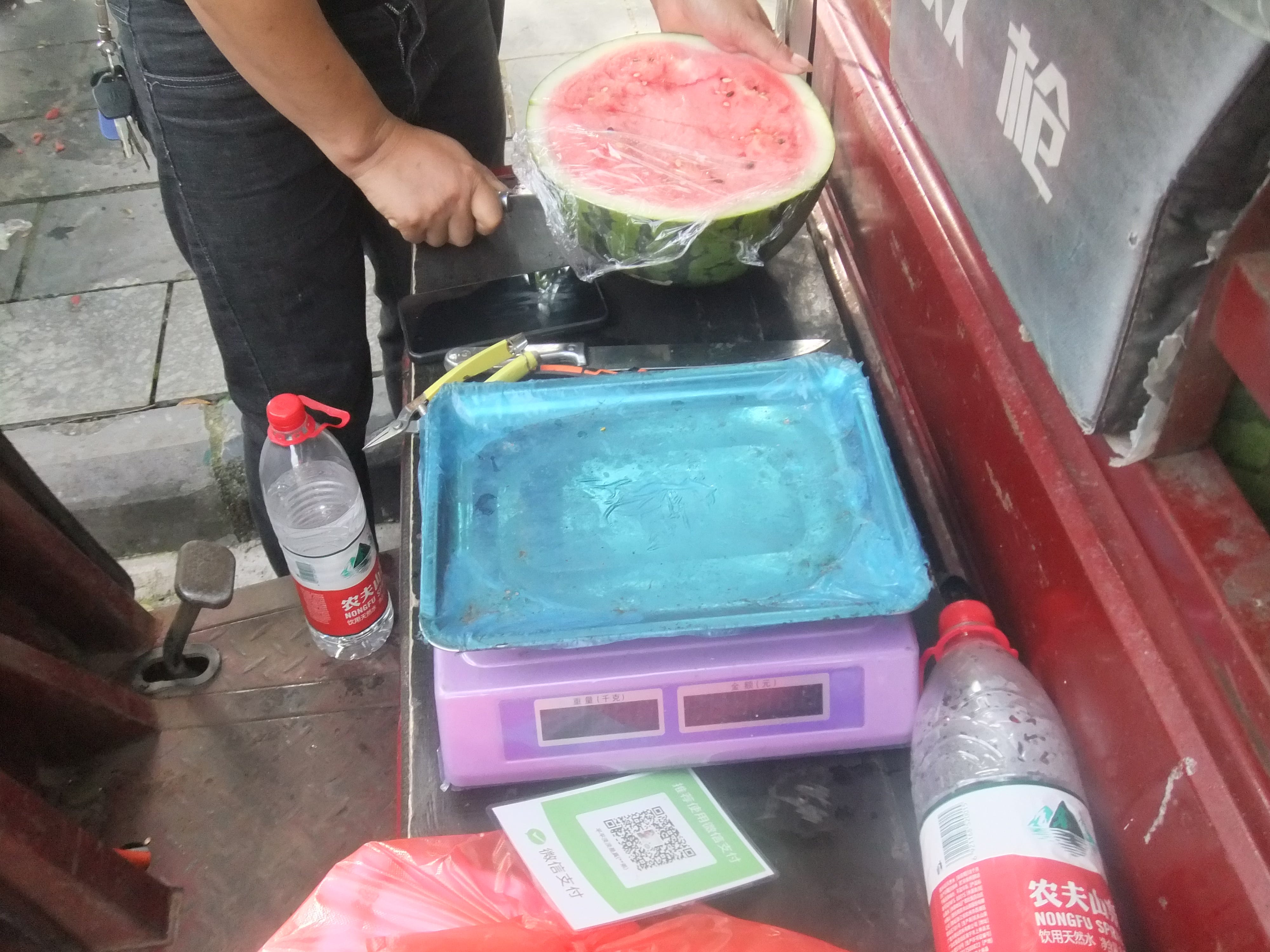
I loudly exclaimed to the seller that we wanted to buy a half. The vendor’s eyes were a dark reddish color, with his arms slouching on a chair in front of him and legs placed behind him, looking like he could use a long nap. He didn’t hear me first, possibly because of the loud microphone repeated messages located right next to his face. I repeated our request once more and then he got straight to work, not hesitating to grab the half watermelon from the pile on the tuktuk.
We successfully bought our halves and pushed the moped back to school,
My host sister calls herself “西瓜教授” or “watermelon professor”. She knows how to cut the watermelon just the right thickness, how to tell when it’s ready to eat, and when the price is too high. I have been with her to her favorite watermelon place, down the street from our apartment complex. Every time she goes to this specific shop, the boss lights up and excitedly gives her the best watermelon she has in stock. Today, I chose my own with this new street vendor, but often the owner of the shop chooses for you.
I learned a lot from this watermelon buying process. You see, the watermelon I bought was actually not that great tasting. I immediately thought we should have tried a new place or just gone to the place my host sister is a frequent customer at.
Then, it clicked. Consumer behavior is deeply rooted in trust, something extremely hard to sell and create. I feel that too many traditional top down economic models and consumer behavior models assume that trust is innate, and rooted in the self desire to go out and buy something. But how often does a moped that runs out of energy make you stop and try something new? The trust my teacher had in this random street vendor where she has never eaten from before was also intriguing to me. I thought, my host sister WOULD NEVER come to a random spot like this, regardless of her moped dying or not. She trusts that the other watermelon place can give her what she wants, a good tasty watermelon.
So today’s interaction posed an interesting question about why consumers avoid certain products and move towards ones they know can provide them with something, a result of trust. For example, my host sister KNOWS that her watermelon place is always high quality and yummy, so she frequents their shop. It may seem so simple to say, “of course if you like a place you will go back”. But it’s important to dig deeper to understand the result, not just the buying process. The result is a KNOWN yummy watermelon, satisfying her cravings. Why would she want to venture out into the unknown and just eat a random watermelon from a stand she has never been? While her internal feelings are one part, her influence on me is another. She has trained me to be a watermelon expert just like her, but only with the knowledge she freely gifted me. So what about those without a watermelon professor host sister in their lives? How does that infuelnce their consumer behavior and expectations in the result of their purchase? How do they know if the coffee from a new cafe would be yummy?
I am noticing information sharing is rooted in relationships and deep social network trust. But it also is rooted in one’s identity they wish to perform. For example, my host sister allows the boss at her favorite place to perform the expert. She has deep trust in the boss to pick the right watermelon for her. Yet, my host sister also has sooo much deep knowledge about how to handle the watermelon after it's been bought. Why does trust and cultural information not count as valuable in these economic models. Trust and information are very tangible and very real “things” that absolutely should be measured (especially through ethnographic methods) for in designing policies involving humans.
But today, I bought the watermelon and I chose it with my hands. Instead of trusting the boss to chose for me. What does this mean for trusting in businesses or companies, especially with the privatization of healthcare on the rise? How can we make room for the all different types of identities and deep cultural knowledge that doesn’t fit within an excel spreadsheet? The NEED for consuming healthcare products outside of a formal hospital becomes clearer and clearer to me everyday.
Everyday I am more and more curious about how to account for both ends of the spectrum of types of consumers and their habits. I will from now on just trust my watermelon specialist. Top down snooty economists need to learn from my watermelon sleepy vendor friend!!!